Daniel Samer
By Daniel Samer
7 min read
 ClawHosters
2026
ClawHosters
2026
 Yixn.io
2026
Yixn.io
2026
 ES Futures Bot
2026
ES Futures Bot
2026
 Hester NG
2026
Hester NG
2026
 SparkChambers
2026
SparkChambers
2026
 Swarmcore
2026
Swarmcore
2026
 Kofferly
2026
Kofferly
2026
 AmpCarry
2026
AmpCarry
2026
 LadeNest
2026
LadeNest
2026
 Novebar
2026
Novebar
2026
 AbroadMode
2026
AbroadMode
2026
 DegenLoot
2026
DegenLoot
2026
 Anti-Baby-Shower
2025
Anti-Baby-Shower
2025
 SipQuest
2025
SipQuest
2025
 PintRush
2025
PintRush
2025
 Linkster.co
2025
Linkster.co
2025
 Golem Overlord
2022
Golem Overlord
2022
 Splex.gg
2021
Splex.gg
2021
 ProPhy
2020
ProPhy
2020
 RLTracker
2016
RLTracker
2016
Loading...
I've done this four times now. Different years, different technologies, completely different markets. And yet, it plays out the same way every single time.
I solve a problem for myself. Then for a few friends. Then strangers ask if they can have it too. And suddenly there's a product.
Turning a side project to a product isn't a conscious decision you make one morning over coffee. It happens gradually. And if you're paying attention as a developer, you spot the pattern before it runs you over.
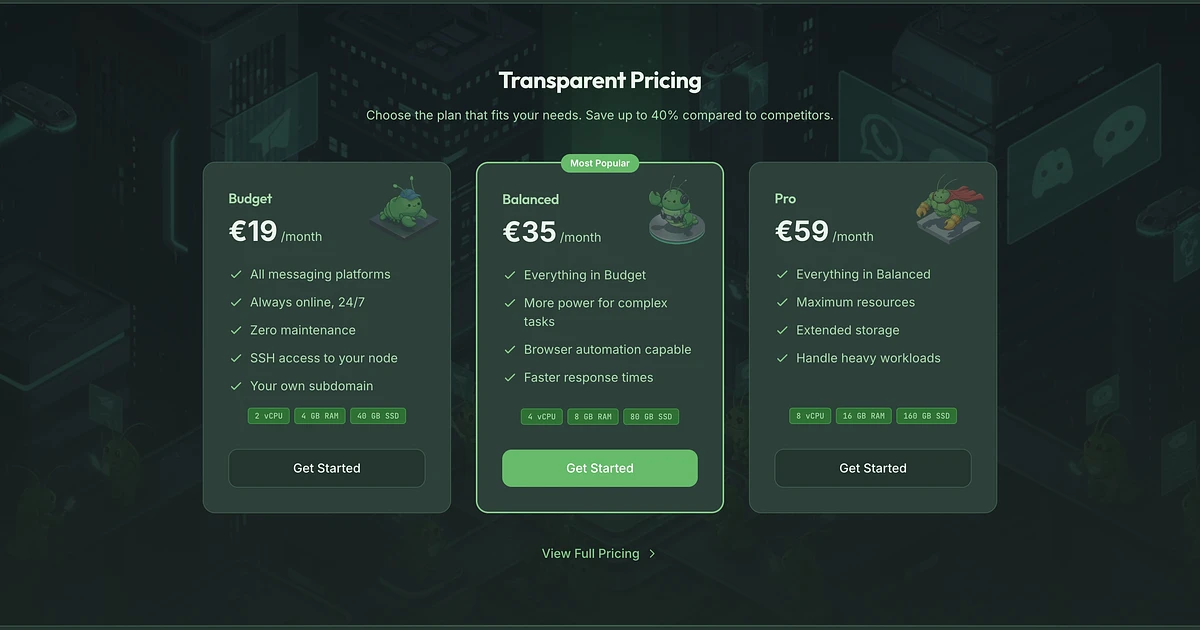
ClawHosters.com is the most recent example. Managed OpenClaw hosting, born from the same sequence: solved a problem, helped friends, noticed demand, built a product. But it's far from the first time this happened.
With RLTracker in 2017, I wanted to trade fairly in Rocket League, needed price data, and nothing good existed. So I built it. A few months later, 2.4 million trades had gone through the platform.
With Splex.gg in 2021, I was playing Splinterlands. Card rentals were manual and annoying, so I automated them. Eventually Splex.gg handled 60% of all rentals on the platform.
With Golem Overlord in 2022, I wanted to build a blockchain game that was actually fun to play. 20,000 daily players told me the idea worked.
And with ClawHosters.com in 2026, I set up OpenClaw for myself, then for friends, then more and more people asked. Now it's a managed hosting service.
At some point it clicks. Not the first time, maybe not even the second. But when you run through the same thing for the fourth time, you realize: This isn't a favor for friends anymore. This is a recurring problem. And recurring problems are the foundation for every successful side project to product transformation.
For me, the transition was never planned.
With RLTracker, the moment came when a Reddit post went viral and 5,000 users showed up within 48 hours. I couldn't pretend it was "just for me" anymore. With Splex.gg it was similar. I shared my tool in a Discord server, and suddenly everyone wanted it.
With ClawHosters.com, the moment was quieter. No viral post. No sudden demand. Instead, a slow realization: if I'm doing the same OpenClaw setup for the eighth time in two weeks, repeating the exact same steps, this isn't a favor for friends anymore. It's a recurring problem screaming for an automated managed hosting solution.
As Adam Wathan demonstrated with Tailwind CSS: turning a side project into a product can become more valuable than the original problem you wanted to solve. Wathan built a CSS framework for himself, showed it during live streams, and viewers kept asking about his approach. The demand validation happened before he even knew he had a product.
The point where helping becomes a product: When you know the steps by heart. When you're on your eighth setup and don't need documentation anymore because you've been through this all before. That's when something's systematically wrong, and systematic problems are worth automating.
I'm writing this on yixn.io, not on the ClawHosters blog. This story isn't "why you should use ClawHosters" (that's what the website is for). This story is about what the side-project-to-product path says about a developer when he's repeated this pattern four times.
I think it shows three things.
First: I spot problems worth turning into products. Not every problem is a business model. But when you see OpenClaw collecting over 145,000 GitHub stars while community members are reporting API costs above $3,600 per month because they can't control their setup, the gap is obvious.
Second: I can ship fast. From idea to working product in a few weeks. Rails remains my framework of choice for solo developers because it lets a single developer handle frontend, backend, and deployment without needing a whole team. ClawHosters is the latest proof that this works.
Third: I stick around. RLTracker ran for four years. Golem Overlord is still running. These aren't weekend projects that get abandoned after launch.
For my clients, that means I bring more than technical skills. I bring product understanding. I know how to go from an idea to something people actually use.
Of course not everything becomes a hit. I've built things nobody wanted. Developed features nobody used. Invested months into ideas that led nowhere. That's part of it.
The realistic timeline for bootstrapped side projects is sobering: roughly 60% of solo developers reach their first paying customer within 3 to 12 months. Only about 5% hit $10K MRR within two to three years. Those numbers aren't encouraging when you read them for the first time.
But they become less scary once you recognize the pattern. Because then it stops being about betting everything on a single project. It becomes about solving real problems, again and again, and staying open to the possibility that one of them grows from side project to product.
If you're a developer solving a problem for yourself and others keep asking if they can have it too, that's not coincidence. That's demand. Whether you do something about it is your decision.
If you want to turn a side project into a SaaS product, you don't need a groundbreaking idea. You need a recurring problem, a solution that works, and the willingness to take the next step.
ClawHosters.com is that next step for me. And at the same time, it's just the latest entry in my portfolio that shows I build things people actually use.
Take a look at my past projects, and you'll see the pattern for yourself.
You solve a problem for yourself or friends, and eventually realize other people have the exact same problem. The transition happens when you formalize your solution, automate it, and make it accessible to others. For ClawHosters, that was the step from manually setting up OpenClaw for friends to automated managed hosting at clawhosters.com.
The strongest signal for the side-project-to-product transition: you're repeating the same process over and over for different people. When you're on your fifth or sixth time going through the exact same steps and people keep asking for it, that's not a one-off thing anymore. That's systematic demand.
No. According to Superframeworks, bootstrapped micro-SaaS businesses typically achieve 70%+ profit margins because there's no VC pressure for hypergrowth. Most solo developers spend less than $1,000 before generating their first revenue. You don't need money. You need a real problem and the ability to solve it.
Rails lets a single developer handle frontend, backend, deployment, and updates. I've used it to build RLTracker, Splex.gg, Golem Overlord, and ClawHosters. The framework makes smart assumptions about project structure and eliminates decisions that slow you down before you've even started.
ClawHosters.com is managed OpenClaw hosting. You get your own OpenClaw instance in under a minute without dealing with Docker, firewalls, updates, or security. Everything runs on Hetzner infrastructure with full root access. BYOK (Bring Your Own Key) for Anthropic or OpenAI is included.